Introduction
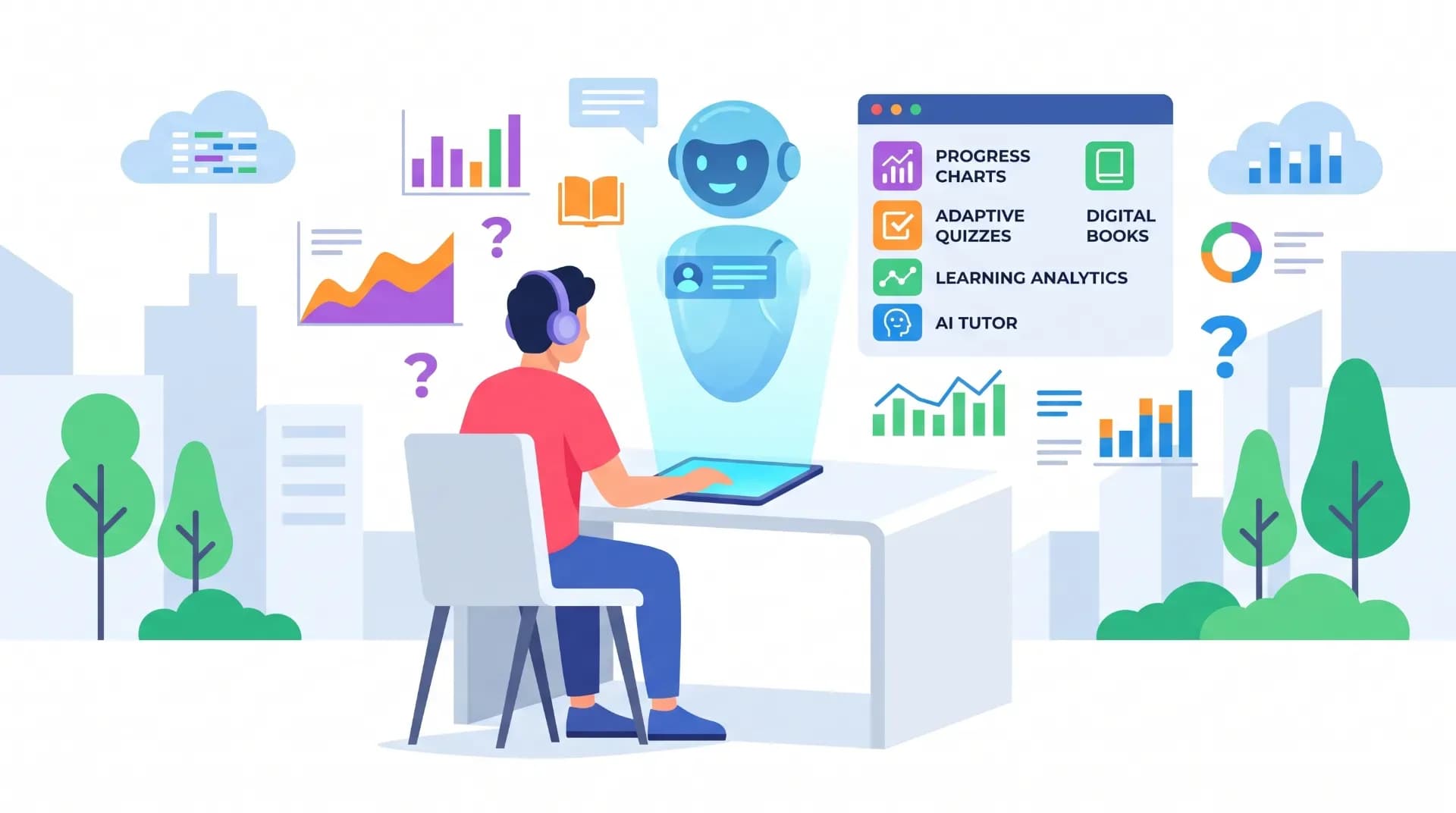
Artificial Intelligence (AI) is changing education fast. Knowing how to increase education productivity with AI helps students, teachers, and institutions work smarter through personalized learning, automated grading, and other practical uses.
Whether you're a student studying more efficiently, a teacher managing large classrooms, or an administrator improving operations, AI offers practical solutions that can save time and support learning outcomes.
In this guide, you'll discover how AI increases productivity across education, the best AI tools available, practical implementation strategies, and future trends shaping more productive classrooms.
What Is AI in Education?
Artificial Intelligence in education refers to computer systems capable of performing tasks that normally require human intelligence. These tasks include:
- Personalized tutoring
- Automated grading
- Content creation
- Language translation
- Speech recognition
- Learning analytics
- Virtual assistants
- Adaptive learning
Modern AI uses machine learning, natural language processing (NLP), and predictive analytics to help learners improve educational outcomes.
Why AI Is Transforming Education
Education has traditionally relied on one-size-fits-all teaching methods. AI changes this by adapting to individual learners.
Key reasons include:
- Faster access to information
- Personalized learning paths
- Better student engagement
- Reduced administrative workload
- Continuous performance monitoring
- Data-driven decision making
Instead of replacing teachers, AI acts as an intelligent assistant, helping improve classroom productivity.
Benefits of Using AI in Learning
AI delivers measurable productivity benefits for every participant in education, from students to institutions.
For Students
Students can:
- Learn at their own pace.
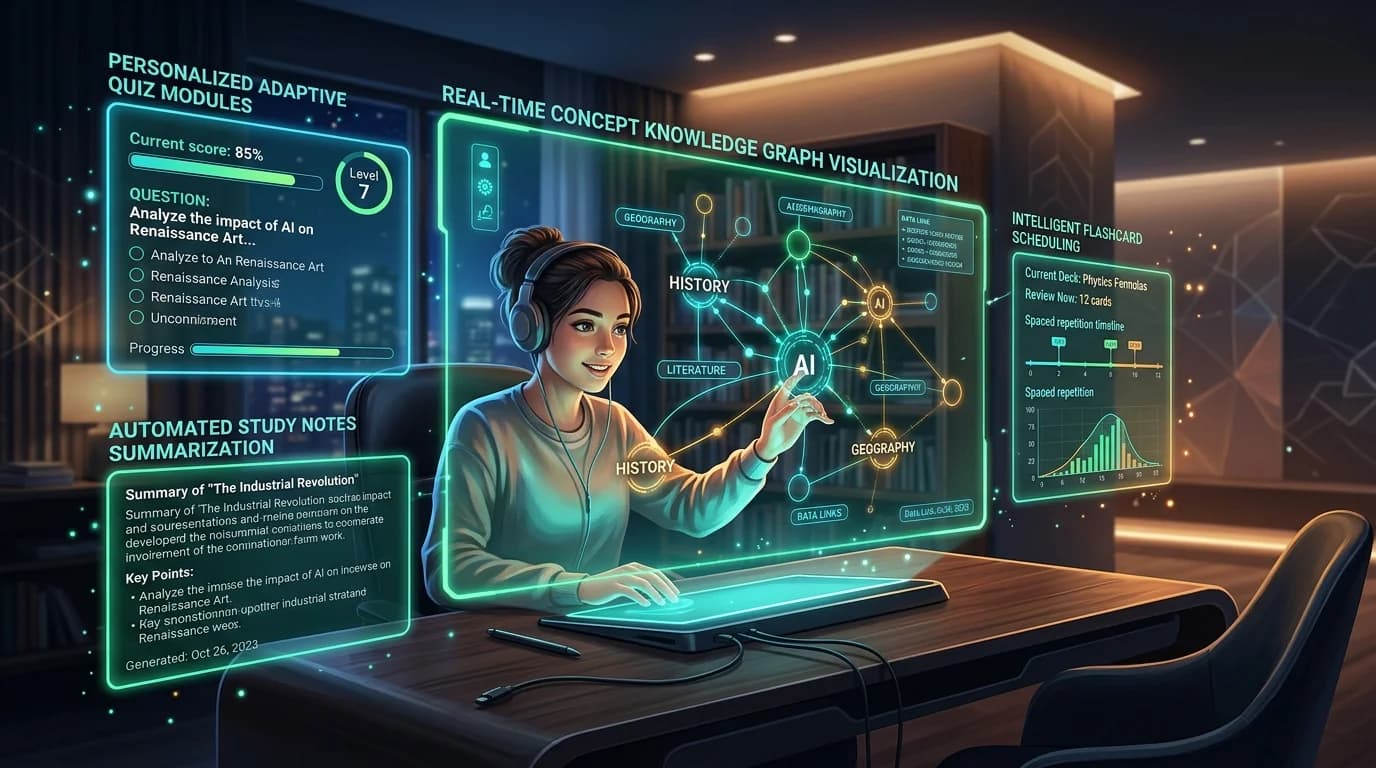
- Receive instant feedback
- Practice personalized exercises
- Improve writing skills
- Access 24/7 tutoring
- Organize study schedules
For Teachers
Teachers benefit from:
- Automatic grading
- Lesson planning assistance
- Content generation
- Attendance tracking
- Student performance analytics
- Reduced paperwork
For Educational Institutions
Schools gain:
- Better resource allocation
- Predictive enrollment analysis
- Improved student retention
- Enhanced online learning
- Cost reduction
- Better decision-making
How to Increase Education Productivity with AI
Understanding how to increase education productivity with AI involves using technology strategically rather than simply adopting new tools. Productivity rises when AI handles repetitive tasks, and humans focus on creativity, collaboration, and critical thinking.
1. Automate Repetitive Tasks
Teachers spend many hours grading, scheduling, tracking attendance, and handling paperwork.
AI can automate:
- Quiz grading
- Assignment evaluation
- Attendance monitoring
- Email responses
- Calendar management
This allows educators to dedicate more time to meaningful instruction and higher-value work.
2. Personalize Learning
Every learner has different strengths and weaknesses.
AI systems analyze:
- Learning speed
- Quiz performance
- Engagement levels
- Knowledge gaps
Based on this information, AI recommends customized lessons and practice exercises.
3. Generate Educational Content
AI tools help educators create:
- Lesson plans
- Worksheets
- Presentations
- Practice questions
- Flashcards
- Summaries
Teachers can edit AI-generated content rather than start from scratch, saving valuable preparation time and increasing productivity.
4. Improve Student Engagement
Interactive AI technologies include:
- Virtual tutors
- Gamified learning
- AI chatbots
- Educational simulations
- Interactive quizzes
These methods encourage active participation instead of passive learning.
5. Analyze Learning Data
AI identifies patterns that humans might overlook.
Examples include:
- Students at risk
- Frequently misunderstood topics
- Attendance trends
- Course completion rates
- Performance predictions
Educational leaders can use these insights to make better decisions.
AI Tools for Students
Several AI-powered platforms improve learning efficiency. They can be grouped by use, including tutoring, writing, and study planning tools. Examples include ChatGPT, Grammarly, Quizlet AI, Khanmigo, Notion AI, and Perplexity AI.
| ChatGPT | Research, explanations, writing assistance |
| Grammarly | Grammar and writing improvement |
| Khanmigo | AI tutoring |
| Quizlet AI | Flashcards and study tools |
| Notion AI | Note-taking and organization |
| Perplexity AI | Research assistance |
Students should use these tools to support learning, not replace independent thinking.
AI Tools for Teachers
Teachers now have access to specialized AI solutions for planning, assessment, presentation, and writing. Examples include ChatGPT, Grammarly, and Notion AI.
Popular categories include:
Lesson Planning
AI generates structured lesson plans aligned with curriculum standards.
Assessment
Automatic quiz creation and grading significantly reduce workload.
Presentation Creation
AI helps create engaging classroom presentations within minutes.
Writing Assistance
Teachers can quickly improve announcements, emails, and educational materials.
AI for Schools and Universities
Educational institutions benefit from AI across multiple departments. These tools can be grouped for admissions, student support, scheduling, and advising. Examples include student support chatbots and predictive analytics platforms.
Applications include:
- Admissions automation
- Student support chatbots
- Predictive analytics
- Library management
- Course scheduling
- Academic advising
Universities increasingly integrate AI into campus management systems to improve efficiency.
Personalized Learning with AI
One of AI's greatest strengths is personalization.
Instead of treating every student the same, AI tailors learning experiences to individual performance.
Examples include:
- Customized homework
- Adaptive quizzes
- Personalized recommendations
- Skill gap analysis
- Learning path optimization
Students stay motivated because lessons match their abilities.
AI-Powered Assessment and Feedback
Traditional grading often requires hours of manual work.
AI dramatically speeds up:
- Multiple-choice grading
- Short-answer evaluation
- Essay feedback
- Plagiarism detection
- Rubric scoring
Immediate feedback helps students improve before misconceptions turn into habits.
Automating Administrative Tasks
Administrative staff also benefit from AI.
Common applications include:
- Student registration
- Timetable generation
- Document processing
- Email automation
- Financial management
- Enrollment forecasting
Automation cuts operational costs, improves service quality, and increases productivity.
Challenges and Ethical Considerations
Despite these advantages, AI introduces several concerns.
Data Privacy
Educational institutions must protect student information and comply with privacy regulations.
Bias
AI models can unintentionally reflect biases present in their training data.
Academic Integrity
Students may misuse AI to complete assignments without genuine learning.
Teacher Training
Educators require professional development to use AI effectively.
Digital Divide
Not all schools have equal access to AI technologies and internet connectivity.
Addressing these challenges requires thoughtful policies, transparency, and ongoing evaluation.
Best Practices for Responsible AI Use
To maximize the benefits of AI while minimizing risks:
- Use AI as a learning assistant, not a replacement for critical thinking.
- Examples include ChatGPT for explanations, Grammarly for writing support, and Quizlet AI for practice.
- Verify AI-generated information with trusted sources.
- Be transparent about AI use in assignments and assessments.
- Protect student data and respect privacy.
- Train educators and students on ethical AI practices.
- Regularly review AI outputs for accuracy and bias.
A balanced approach ensures AI enhances education productivity without compromising quality or integrity.
Future Trends in AI Education
The role of AI in education will continue to expand. Emerging trends include:
- AI-powered virtual reality classrooms
- Intelligent learning companions
- Real-time language translation for global classrooms
- Predictive student success analytics
- Emotion-aware learning systems
- More sophisticated adaptive learning platforms
As these technologies mature, educators will gain more opportunities to personalize instruction and improve productivity.
Frequently Asked Questions
1. What is the biggest benefit of AI in education?
AI saves time by automating repetitive tasks while providing personalized learning experiences that improve productivity and student outcomes.
2. Can AI replace teachers?
No. AI is designed to support teachers, not replace them. Human educators remain essential for mentoring, fostering creativity, providing emotional support, and developing critical thinking.
3. Is AI suitable for all age groups?
Yes, provided the tools are age-appropriate and used under appropriate guidance, especially for younger learners.
4. How can students use AI responsibly?
Students should use AI for explanations, practice, brainstorming, and organization while completing their own critical thinking and original work.
5. What are the risks of using AI in education?
Potential risks include data privacy concerns, algorithmic bias, overreliance on AI, and academic integrity issues if used improperly.
6. Which AI tools are most popular for education?
Widely used tools include ChatGPT, Grammarly, Quizlet AI, Khanmigo, Notion AI, and Perplexity AI, each serving different educational needs.
Conclusion
Learning how to Increase Education Productivity with AI is essential for modern education. AI empowers students with personalized learning, helps teachers reduce administrative burdens, and enables institutions to make smarter, data-driven decisions. By using AI thoughtfully, education can become more productive, efficient, and effective for everyone involved.
The most effective approach combines AI's speed and analytical capabilities with the creativity, empathy, and judgment of human educators. When used responsibly, AI creates more engaging classrooms, improves learning outcomes, and frees educators to focus on what matters most: inspiring and supporting learners.
To stay ahead, educators and students should keep exploring new AI tools, evaluate them critically, and integrate them thoughtfully into teaching and learning.
For further reading on AI in education, visit the UNESCO guidance on generative AI in education: https://www.unesco.org/en/artificial-intelligence/education